
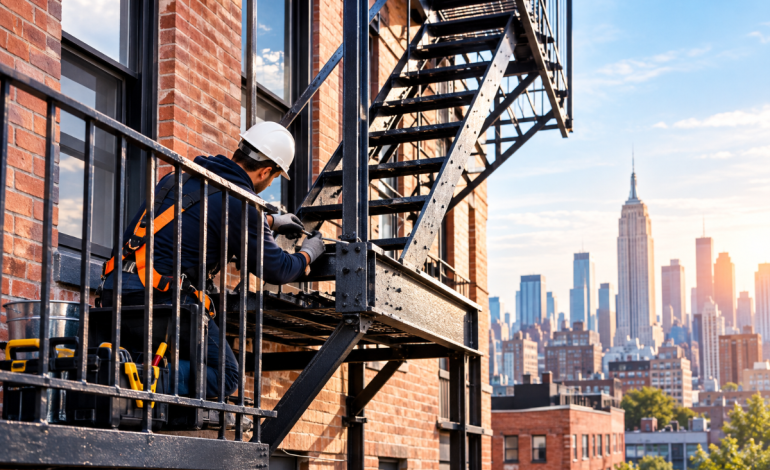
Fire escapes are an important safety feature on many older and multi-story buildings in New York City. Because they remain exposed to rain, snow, humidity, temperature changes, and everyday wear, their condition can change over time. Even a fire escape that looks solid from the ground may have hidden rust, weakened connections, or other structural issues.
Understanding how long a fire escape can last, what affects its lifespan, and when repairs are necessary can help property owners maintain a safer building.
For property owners looking for fire escape repairs NYC, regular inspections and timely maintenance are important parts of keeping these structures reliable.
There is no single lifespan that applies to every fire escape. A well-maintained steel fire escape can remain functional for many decades, but its actual service life depends on several factors. The quality of the original construction, type of metal, exposure to weather, drainage, protective coatings, previous repairs, and maintenance history can all affect durability.
Older fire escapes may require more frequent attention because years of exposure can gradually weaken metal components and connections. Instead of relying only on the age of the structure, property owners should pay attention to its current condition.
Several environmental and structural factors can contribute to fire escape damage.
Rust is one of the most common concerns with steel fire escapes. Continuous exposure to moisture can cause oxidation, particularly when paint or protective coatings have worn away. If corrosion continues for an extended period, it can reduce the strength of metal components and affect areas such as platforms, stairs, railings, bolts, and connections.
New York City fire escapes are exposed to changing weather throughout the year. Rain and snow can introduce moisture, while freezing and thawing can contribute to deterioration around joints and connections. Over time, repeated exposure can damage protective coatings and accelerate corrosion.
Poor drainage can allow water to remain on platforms or around connection points. Standing water increases the chance of corrosion and can make existing damage worse. Keeping drainage areas clear and addressing damaged surfaces can help reduce unnecessary moisture exposure.
Fire escapes are designed to support people during an emergency, but their components can deteriorate with age. Loose connections, damaged stairs, weakened brackets, or deteriorated platforms may affect the overall condition of the structure.
Any visible movement, unusual sounds, or damaged components should be evaluated rather than ignored.
Property owners should watch for visible signs of deterioration. Common warning signs include:
Some structural problems may not be obvious during a basic visual check. For this reason, professional inspection can be important when a fire escape is old, heavily corroded, or showing signs of damage.
Regular maintenance can help identify smaller problems before they become more extensive. Cleaning, corrosion control, protective coatings, and repairs to damaged components can help extend the useful life of a fire escape. Maintenance also provides an opportunity to identify problems with connections and structural components before they become more serious.
For building owners, keeping records of inspections, maintenance, and completed repairs can also make it easier to monitor the condition of the structure over time.
A fire escape should not be repaired based solely on its age. Its condition is more important than a specific number of years. Repairs may be appropriate when damage is localized and the underlying structure can be restored. Depending on the condition, work may involve replacing deteriorated components, repairing connections, addressing corrosion, reinforcing weakened areas, or restoring protective coatings.
If deterioration is extensive, a professional assessment may be necessary to determine whether more significant rehabilitation or replacement is appropriate.
Proper repairs can help restore damaged components and protect the remaining structure from further deterioration.
A typical repair and maintenance approach may include:
The first step is identifying visible and potential structural problems. This may include examining stairs, platforms, railings, brackets, fasteners, and building connections.
Where corrosion is present, affected areas may need to be cleaned and treated appropriately before further repair work is performed.
Severely deteriorated components may need to be repaired or replaced, depending on the condition and requirements of the structure.
Appropriate protective coatings can help reduce future exposure to moisture and slow the development of corrosion.
Connections between the fire escape and building are especially important. Loose, damaged, or deteriorated connections should receive professional attention.
Yes, an older fire escape can remain serviceable when it has been properly maintained and is in good structural condition. Age alone does not automatically mean that a fire escape needs to be replaced.
However, older structures deserve careful attention because they may have experienced decades of weather exposure and deterioration. A professional evaluation can help determine whether maintenance, repairs, reinforcement, or more extensive work is needed.
Maintaining a fire escape is not simply about improving the appearance of a building. These structures are intended to provide emergency access and must remain in suitable condition for their intended purpose.
NYC property owners should stay aware of applicable building safety requirements and arrange appropriate inspections and repairs when problems are identified. Working with qualified professionals can help ensure that repairs address the actual condition of the structure rather than only covering visible damage.
When selecting a contractor for fire escape repairs NYC, property owners should consider experience with structural repair and exterior building components.
A professional contractor should be able to evaluate visible deterioration, identify repair needs, explain recommended work, and provide a clear scope of services.
It is also important to address problems promptly. Delaying repairs can allow corrosion and structural deterioration to progress, potentially increasing the amount of work required later.
Sigma Builders INC provides building construction and repair services for property owners who need professional assistance with exterior and structural building concerns.
For fire escape maintenance and repair needs, a proper assessment can help identify corrosion, damaged components, connection issues, and other conditions that may require attention. The goal is to address problems appropriately and help maintain a safer, more durable structure.
Property owners should not wait until visible damage becomes severe. Regular attention and timely repairs can help preserve a fire escape and reduce the risk of larger maintenance problems in the future.
A well-maintained fire escape can last for many decades, but its lifespan depends on materials, weather exposure, corrosion, structural condition, and maintenance history.
Common signs include heavy rust, damaged stairs, loose bolts, weakened railings, cracks, sagging, deteriorated metal, and unusual movement.
The appropriate inspection schedule depends on the building and applicable NYC requirements. Property owners should also arrange professional evaluations when visible damage or deterioration is discovered.
Yes. If left untreated, corrosion can gradually reduce the strength of metal components and connections. Early maintenance and repairs can help limit further deterioration.
In many cases, yes. If the structure is repairable, damaged components can potentially be restored or replaced. A professional assessment can determine the appropriate approach.
A fire escape can remain useful for many years when it is properly maintained, but there is no universal lifespan that applies to every structure. Weather exposure, corrosion, construction quality, maintenance history, and structural condition all influence how long it can remain serviceable.
Regular inspections and timely fire escape repairs NYC can help property owners identify deterioration early and keep necessary repairs manageable. If a fire escape shows rust, loose connections, damaged stairs, weakened railings, or other warning signs, having the structure professionally evaluated is a practical step toward maintaining building safety.
Leave A Reply