
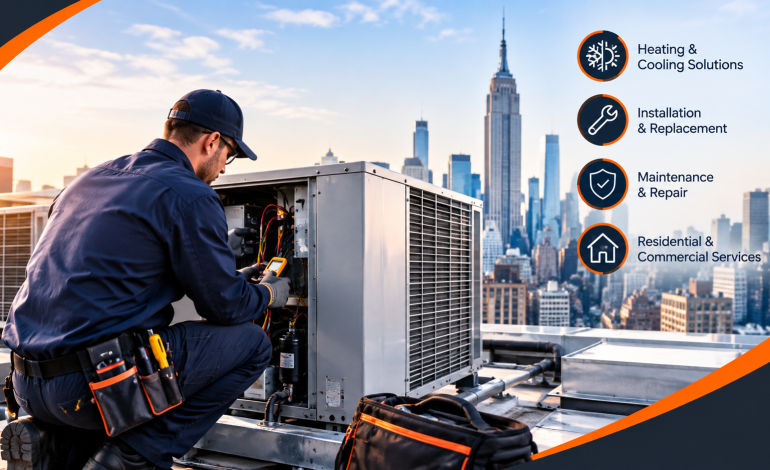
Heating and cooling systems are essential for maintaining a comfortable indoor environment, especially in New York City. Buildings in NYC experience freezing winter temperatures, warm summers, and frequent changes in weather. These conditions can place considerable demands on HVAC equipment throughout the year.
Like other building systems, HVAC equipment can develop problems over time. Some issues are easy to notice, while others begin with small changes in performance. A room that takes longer to cool, unusual equipment sounds, or a steady increase in energy costs may all indicate that something needs attention.
Recognizing these signs early can help building owners address problems before they affect comfort, increase operating costs, or lead to unexpected equipment failure. Professional HVAC Contractors NYC can evaluate the system and determine whether maintenance, repair, adjustment, or replacement is appropriate.
HVAC systems do much more than heat and cool indoor spaces. They also support air circulation and help maintain suitable indoor conditions for occupants. The requirements of an HVAC system can vary considerably depending on the property. A small residential building, office, retail space, apartment complex, and large commercial property may all require different equipment and maintenance approaches.
New York City’s seasonal weather makes reliable HVAC performance particularly important. Heating systems may operate extensively during winter, while cooling equipment can face heavy demand during summer. When equipment is not performing properly, the effects can be noticed throughout the building.
If one part of a building feels comfortable while another is noticeably warmer or colder, the HVAC system may not be distributing air effectively.
Uneven temperatures can have several causes. Problems with ductwork, airflow, thermostats, equipment performance, insulation, or system balancing can all contribute to inconsistent conditions.
Changing the thermostat repeatedly may provide only temporary relief. A professional inspection can help identify why certain areas are not receiving the expected heating or cooling.
Higher utility bills do not always mean there is an HVAC problem. Energy prices, building occupancy, weather, and operating schedules can all affect costs. However, an unexplained and persistent increase in energy consumption can be a reason to examine the HVAC system.
Equipment that has to work harder than necessary may consume more energy. Restricted airflow, dirty components, aging equipment, duct problems, and control issues are examples of factors that can affect efficiency. An HVAC professional can assess the system and determine whether maintenance or repairs could improve its operation.
Strong and consistent airflow is important for effective heating and cooling. If air coming from vents suddenly feels weaker than normal, the problem should be investigated. Restricted filters, ductwork issues, blower problems, or equipment-related faults can affect airflow. In larger buildings, a problem in one part of the distribution system may also affect specific rooms or floors.
Instead of simply increasing the heating or cooling setting, property owners should determine why airflow has changed.
Every HVAC system makes some noise while operating. However, a sudden change in the type or volume of noise can indicate a problem. Rattling, grinding, squealing, buzzing, or repeated banging may come from different components. The cause could range from a loose part to a mechanical or electrical issue.
Ignoring unusual sounds can allow a relatively small problem to become more complicated. A professional inspection can identify the source and determine what action is needed.
An occasional repair may be expected as HVAC equipment ages. Frequent breakdowns, however, can indicate that the system requires closer attention. Repeated service calls can become expensive and disruptive, particularly in commercial buildings where temperature control may be important for employees, customers, tenants, or equipment.
When breakdowns become more common, an HVAC contractor can evaluate the system as a whole rather than addressing each problem separately. This assessment can help determine whether continued repairs make sense or whether replacement should be considered.
Temperature is only one part of indoor comfort. Humidity also affects how a building feels. If indoor spaces remain excessively humid during warm weather, the HVAC system may not be removing moisture effectively. On the other hand, excessively dry conditions during winter may also create discomfort.
Humidity problems can have multiple causes, including HVAC performance, ventilation, building conditions, or moisture intrusion. Professional evaluation can help determine where the problem originates.
A persistent smell coming from an HVAC system deserves attention. Musty odors may indicate moisture-related conditions, while burning or electrical smells can point to an equipment problem that requires prompt professional assessment.
Odors can originate from filters, ductwork, equipment, moisture, or other parts of the building. Because the cause is not always obvious, it is better to have the system inspected rather than masking the smell with air fresheners.
An HVAC system that constantly starts and stops may not be operating normally. Frequent cycling can be associated with thermostat problems, airflow restrictions, equipment issues, system sizing, or other conditions. Repeated starting and stopping can also place additional stress on certain components.
A professional contractor can examine the system and determine what is causing the unusual operating pattern.
Another warning sign is when the HVAC system runs for extended periods but struggles to reach the desired temperature. This can happen for several reasons. Equipment performance, airflow, ductwork, insulation, controls, and building characteristics can all influence how quickly indoor temperatures change.
If the system regularly runs for long periods without achieving the expected result, a professional evaluation can help identify the underlying issue.
Older HVAC equipment is not automatically defective. With proper maintenance, many systems can continue operating for years. However, aging equipment may experience more component wear and may require more frequent repairs. Replacement parts can also become more difficult to obtain for certain older systems.
If an older system is becoming unreliable, property owners can benefit from having its condition evaluated. A professional can explain whether maintenance, repairs, upgrades, or replacement are practical options.
Small HVAC problems do not always remain small. A restricted airflow issue, for example, can place additional strain on equipment. A mechanical problem can potentially worsen if the affected component continues operating under abnormal conditions. HVAC problems can also affect building occupants. Inconsistent temperatures, poor airflow, excessive humidity, or unexpected system shutdowns can make indoor spaces uncomfortable.
For commercial properties, HVAC problems may also interfere with normal operations. This does not mean every unusual symptom requires immediate system replacement. The appropriate response depends on the cause and condition of the equipment. Professional diagnosis is important before deciding what work should be performed.
A professional HVAC assessment should focus on the actual condition and requirements of the property. Depending on the system, a contractor may examine equipment performance, airflow, controls, filters, ductwork, visible components, and other relevant parts of the system.
The contractor can then explain the findings and identify potential solutions. These may include routine maintenance, targeted repairs, system adjustments, equipment upgrades, or replacement. For larger NYC buildings, HVAC planning may also involve considering occupancy, building layout, energy use, equipment capacity, and long-term operating requirements.
Waiting until an HVAC system completely fails is rarely the ideal approach. Preventive maintenance provides an opportunity to identify developing issues before they cause major disruption.
Maintenance requirements vary by system and manufacturer, but regular professional attention may include inspecting components, checking airflow, replacing or servicing filters, examining controls, and looking for signs of wear.
A consistent maintenance approach can also give building owners a better understanding of how their equipment is performing over time.
When selecting HVAC Contractors NYC, property owners should consider more than price alone. Experience with the type of building and HVAC system is important. It is also useful to choose a contractor who can clearly explain the problem, discuss available solutions, and provide information about the work being recommended.
For commercial and larger properties, experience with complex building systems can be particularly valuable.
Maintaining a building requires attention to the systems that keep it safe, functional, and comfortable. HVAC is an important part of that overall responsibility.
Sigma Builders INC provides building-related services for property owners who need professional support with construction and maintenance requirements. When HVAC performance begins to change, having the system properly evaluated can help identify the appropriate next step.
Rather than waiting for a complete breakdown, property owners can address warning signs early and make informed decisions based on the condition of their equipment.
HVAC problems often begin with subtle changes. Uneven temperatures, weak airflow, unusual noises, rising energy costs, persistent humidity, strange odors, frequent cycling, and repeated breakdowns can all indicate that a building’s HVAC system needs professional attention. For NYC property owners, recognizing these signs can help prevent avoidable disruptions and maintain more consistent indoor conditions.
Professional HVAC Contractors NYC can assess the system, identify the source of performance problems, and explain suitable options based on the building’s needs. Regular maintenance combined with timely professional inspections can help property owners manage their HVAC systems more effectively throughout the year.
Leave A Reply