
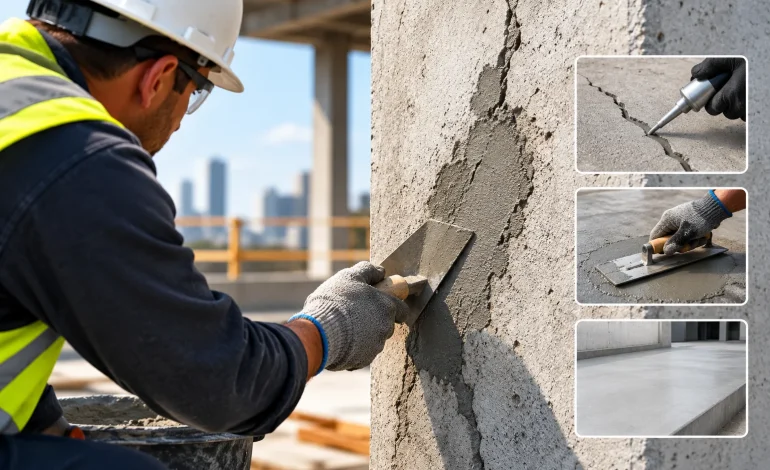
Cracked concrete is something many property owners eventually encounter. Small cracks may appear on sidewalks, driveways, slabs, foundations, parking areas, and other concrete surfaces. Some are simply signs of normal aging, while others can point to moisture problems, ground movement, poor installation, or more serious deterioration. The important question is: can cracked concrete be repaired, or does it need to be replaced?
There is no single answer because the right solution depends on the location, size, depth, pattern, and cause of the crack. Professional Concrete Repair Contractors can inspect the damaged area and determine whether a repair is enough or replacement is a better option.
Concrete is designed to provide strength and durability, but it is not completely resistant to cracking. Several factors can contribute to cracks over time.
Common causes include:
In New York City, concrete surfaces are exposed to changing weather conditions, moisture, heavy use, and daily environmental stress. These factors can gradually affect the condition of concrete if damage is not addressed.
No. The appearance of a crack alone does not always mean that the entire concrete surface needs to be replaced. Some narrow surface cracks can occur naturally as concrete dries and shrinks. If the surrounding concrete remains stable and there are no other signs of deterioration, a professional repair may be sufficient.However, cracks should not simply be ignored. Their size, location, direction, depth, and progression can provide important information about the condition of the concrete.
A crack that continues to grow, becomes wider, or appears alongside settlement and crumbling deserves professional attention.
Concrete repair is often possible when the damage is limited and the underlying material remains in reasonably good condition.
Fine cracks that are limited to the surface may be suitable for filling or sealing. The appropriate method depends on the type and location of the crack.
If only a small section of concrete has deteriorated while the surrounding material remains sound, contractors may be able to repair the affected area instead of replacing the entire surface.
Small areas of surface deterioration may sometimes be repaired after loose or damaged material is properly removed.
Some cracks do not affect the overall structural performance of the concrete. After determining the cause and condition, a suitable repair method may restore the damaged area.
Repair is not always the best long-term solution. When concrete has extensive deterioration or the underlying problem cannot be resolved through a simple repair, replacement may be necessary.
Replacement may be considered when the concrete has:
In these situations, covering the visible damage may only provide a temporary result. Removing the damaged concrete and addressing the underlying problem may provide a more durable solution.
The difference between repair and replacement is relatively straightforward.
Concrete repair involves restoring the damaged portion while retaining as much of the existing concrete as practical. Depending on the condition, this can include crack sealing, patching, resurfacing, or localized repairs.
Concrete replacement involves removing damaged concrete and installing new concrete in its place. This is generally considered when the existing material has deteriorated significantly or when repair would not provide a reliable long-term result.
The cheapest option is not necessarily the appropriate option. A proper assessment should come first so the work addresses the actual cause of the problem.
Before recommending a solution, experienced Concrete Repair Contractors look at more than just the visible crack.
A narrow surface crack may require a different approach from a deep or expanding crack. Contractors evaluate the characteristics of the damage to understand its severity.
The location of the crack is also important. A crack in a sidewalk, driveway, foundation, retaining wall, or structural concrete element may have different implications.
If the concrete has shifted, settled, or continued to move, simply filling a crack may not solve the underlying problem.
Professionals may also look for crumbling, exposed aggregate, spalling, discoloration, uneven areas, or other signs of deterioration.
Water can contribute to concrete deterioration, particularly when drainage is poor. Identifying moisture-related problems can help prevent the same damage from returning after repairs.
The repair method depends on the condition and type of damage. Some common approaches include:
Suitable cracks can be sealed to help limit the entry of water, dirt, and other materials.
Damaged or loose sections can sometimes be removed and patched with an appropriate repair material.
If the underlying concrete is still in good condition but the surface has become worn, resurfacing may be considered.
When deterioration is limited to specific areas, contractors may repair those sections without replacing the entire concrete surface.
If a particular section is beyond practical repair, that portion may be removed and replaced while keeping unaffected areas intact.
Weather is an important consideration for concrete surfaces in New York City. Concrete can be exposed to rain, snow, freezing temperatures, summer heat, and repeated temperature fluctuations. Water that enters cracks can contribute to deterioration. During freezing conditions, moisture can expand and place additional stress on damaged areas. Repeated exposure over several seasons may gradually make existing problems worse.
This is why timely inspection and maintenance are particularly important for concrete surfaces that are exposed to the elements.
A small crack may remain relatively minor, but there is no guarantee that it will stay that way. Depending on its cause and location, untreated concrete damage can allow moisture to enter, contribute to further surface deterioration, or create uneven areas. Cracks can also become more noticeable as the concrete continues to experience weather and everyday use.
For property owners, identifying the cause early can make it easier to select an appropriate repair strategy.
While some concrete cracking is unavoidable, regular maintenance can help reduce unnecessary deterioration.
Property owners can:
Routine attention can help property owners identify problems before they require more extensive work.
The best way to make this decision is through a professional assessment. A contractor can examine the concrete, evaluate the extent of deterioration, identify possible contributing factors, and explain the available options. In some cases, a straightforward repair may be appropriate. In others, partial or complete replacement may provide a more dependable solution.
The goal should not simply be to hide the crack. The goal is to address the condition of the concrete and, where possible, the reason the damage occurred.
For property owners dealing with cracked or deteriorating concrete, Sigma Builders INC provides professional construction and concrete services in NYC. Its team can assess concrete-related concerns and help determine an appropriate approach based on the condition of the affected area.
Whether the problem involves surface cracking, damaged slabs, deteriorated concrete, or other concrete concerns, getting the issue evaluated early can help you make an informed decision about repair or replacement.
If you notice cracks that are widening, recurring, accompanied by settlement, or associated with crumbling or other deterioration, consider arranging a professional inspection rather than waiting for the problem to progress.
Yes, some cracked slabs can be repaired if the damage is limited and the underlying concrete remains stable. Extensive cracking, settlement, or deterioration may require partial or complete replacement.
Widening cracks, deep cracks, recurring damage, significant settlement, crumbling, spalling, and uneven surfaces are reasons to have the concrete professionally evaluated.
Repair and replacement serve different purposes. Repair may be appropriate for limited damage, while replacement may be necessary when concrete has extensive deterioration or an underlying issue that cannot be effectively resolved through repair.
The lifespan of a repair depends on the type of damage, repair method, concrete condition, environmental exposure, and whether the underlying cause has been addressed.
Weather can contribute to concrete deterioration. Moisture, freezing temperatures, temperature changes, and repeated exposure to the elements can affect already damaged concrete.
Contact Concrete Repair Contractors when you notice significant cracks, crumbling, spalling, settlement, uneven surfaces, or concrete damage that continues to return after previous repairs.
Leave A Reply