
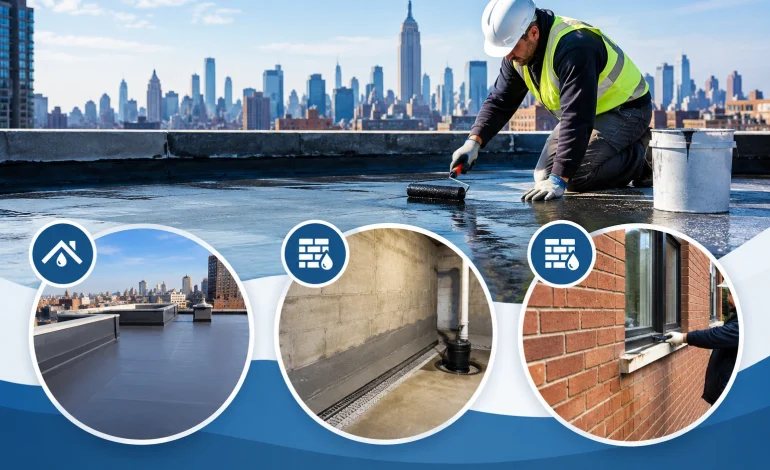
Water damage can create serious problems for residential and commercial buildings in New York City. Heavy rainfall, melting snow, changing temperatures, and aging construction materials can allow moisture to enter through roofs, foundations, and exterior walls. If these issues remain untreated, they may lead to damaged masonry, interior leaks, mold growth, and expensive repairs.
Professional Building Waterproofing Services NYC help property owners protect their buildings against moisture intrusion and weather-related deterioration. Whether a property needs roof leak prevention, foundation protection, or exterior wall repairs, the right waterproofing approach can improve building performance and help preserve its long-term value.
Sigma Builders INC understands the importance of maintaining durable building exteriors and addressing potential water damage before it becomes a larger concern. By identifying vulnerable areas and selecting suitable waterproofing methods, property owners can protect their investments and reduce ongoing maintenance challenges.
New York City’s buildings experience a range of environmental conditions throughout the year. Rain, snow, humidity, and freeze-thaw cycles can gradually weaken roofing materials, masonry joints, concrete surfaces, and exterior sealants. Older buildings may be especially vulnerable when their original waterproofing systems have deteriorated.
Even a small crack or damaged joint can allow water to enter a building. Once moisture reaches concealed areas, it may affect insulation, interior finishes, and structural materials. Investing in building waterproofing offers several important benefits:
For property owners and building managers, waterproofing is an important part of preventive maintenance rather than something to consider only after a leak develops.
Roofs are continuously exposed to rain, snow, wind, sunlight, and temperature fluctuations. Over time, roofing membranes can deteriorate, flashing may loosen, and drainage systems can become blocked. These problems create opportunities for water to enter the building.
Roof leaks may appear as ceiling stains, peeling paint, damp insulation, or water dripping into occupied spaces. However, the visible damage does not always indicate the exact location of the leak because water can travel beneath roofing materials before reaching the interior.
Professional roof waterproofing focuses on identifying vulnerable areas and restoring the roof’s ability to resist water penetration.
Roof membrane systems: Waterproof membranes provide a protective layer that helps prevent water from passing through the roofing assembly. The appropriate membrane depends on the roof design and existing materials.
Flashing repairs: Flashing protects transitions around parapets, chimneys, vents, and other roof penetrations. Damaged flashing can create direct pathways for moisture.
Seam and joint sealing: Compatible sealants help close gaps in vulnerable roof joints and connections.
Drainage improvements: Maintaining functional roof drains and correcting drainage problems can help prevent unwanted water accumulation.
Protective roof coatings: Certain coatings can improve water resistance and protect compatible roofing surfaces from weather exposure.
The right solution depends on the roof’s age, condition, material, and drainage design. A professional inspection can help determine whether localized repairs, a suitable coating, or a more extensive waterproofing system is necessary.
Foundation waterproofing is essential for many NYC properties, particularly buildings with basements, cellars, and other below-grade spaces. Groundwater, poor drainage, and water pressure against foundation walls can contribute to dampness and water seepage. Common warning signs include musty odors, damp walls, water stains, peeling paint, and puddles following heavy rainfall. Cracks in concrete or masonry can also provide pathways for water to enter.
If these problems are ignored, moisture may damage stored belongings, weaken interior finishes, and create conditions that encourage mold growth.
Exterior foundation waterproofing involves treating the outside of foundation walls to help prevent water from penetrating the structure. Depending on site conditions, the work may include crack repairs, surface preparation, waterproof membranes, protective drainage layers, and improvements to perimeter drainage.
Although exterior work can require excavation, it may be appropriate when the goal is to prevent water from reaching the foundation wall.
Interior waterproofing approaches can help manage water that enters or accumulates inside below-grade spaces. Depending on the cause, solutions may include interior drainage channels, sump pumps, and compatible wall or floor treatments.
It is important to understand the difference between preventing water entry and managing water after it enters. An interior drainage system may control seepage without eliminating the source of the moisture.
Cracks should be evaluated to determine their cause and severity before repairs begin. Suitable methods may include specialized injection materials or compatible sealants selected for the crack type and water conditions.
Cracks that widen, show signs of structural movement, or occur alongside bowing walls may require further structural assessment.
Exterior walls protect buildings against rain, wind, and changing temperatures. In New York City, brick facades, stonework, concrete walls, and other exterior finishes can develop moisture problems as materials age and joints deteriorate.
Water may enter through damaged mortar joints, cracks, failed sealants, defective flashing, and openings around windows or doors. Once moisture penetrates the wall assembly, it can damage interior finishes and contribute to the deterioration of masonry and other materials.
Professional exterior wall waterproofing addresses these vulnerable points while considering the building’s construction and existing condition.
Masonry repointing: Deteriorated mortar joints are repaired to help reduce water penetration and maintain the integrity of masonry walls.
Crack sealing: Appropriate repair materials are used to seal identified cracks in compatible exterior surfaces.
Joint and sealant replacement: Damaged sealants around windows, doors, and building transitions are replaced to reduce moisture entry.
Flashing repairs: Correcting defective flashing helps direct water away from vulnerable openings and connections.
Water-repellent treatments: Suitable breathable treatments can reduce water absorption in certain masonry materials while allowing water vapor to escape.
Not every wall requires the same waterproofing treatment. An unsuitable coating can trap moisture inside certain wall assemblies and contribute to further deterioration. A professional assessment helps determine the most appropriate solution for the building’s materials and exposure conditions.
Waterproofing problems can develop gradually, making early warning signs easy to overlook. Regular inspections help property owners identify potential issues before they require extensive repairs.
Look for the following signs:
These symptoms can have different causes. For example, condensation may resemble a water leak, while basement seepage may result from groundwater pressure or poor drainage. Identifying the source of the moisture is essential for selecting a repair method that addresses the underlying problem.
There is no single waterproofing method that works for every building. The most suitable solution depends on the source of moisture, construction materials, building age, and the extent of existing damage.
Before starting a waterproofing project, consider these important factors.
An inspection should identify visible damage, deteriorating joints, cracks, failed sealants, and other vulnerable areas. Older masonry buildings may require different repair materials and techniques from modern concrete structures.
Determining where the water originates is essential. Roof leaks, groundwater seepage, plumbing problems, and condensation require different solutions. Repairing only the visible damage may allow the problem to return.
Waterproofing works best when water is managed properly around the building. Roof drains, downspouts, exterior grading, and foundation drainage should be reviewed where relevant.
Waterproofing products must suit the surface and the building’s moisture conditions. Using an incompatible coating, sealant, or membrane can reduce performance and may worsen existing moisture problems.
Waterproofing systems require periodic inspections. Sealants may deteriorate, drains can become blocked, and new cracks may develop as a building ages. Regular maintenance helps property owners identify these changes early.
Waterproofing requires more than applying a coating or filling a visible crack. Water can travel through concealed spaces, and the location where a leak appears may be different from the actual point of entry.
Professional Building Waterproofing Services NYC help property owners identify moisture problems, assess vulnerable building components, and select appropriate repair methods.
Working with qualified building professionals can offer several advantages.
Professional services are particularly valuable for large residential buildings, commercial properties, complex facade systems, and projects that involve excavation or specialized access.
Maintaining a building in New York City requires consistent attention to exterior conditions and potential sources of moisture. Roofs, foundations, and exterior walls each play an important role in protecting the structure from water damage.
Sigma Builders INC can be considered when evaluating building maintenance and waterproofing needs. The appropriate scope of work should depend on the property’s condition, the source of water intrusion, and the services available for the specific project.
Property owners and building managers can begin by arranging an assessment of areas showing signs of leakage, dampness, or exterior deterioration. This helps establish repair priorities and determine whether localized work or a broader waterproofing strategy is appropriate.
When comparing contractors, ask about their experience with similar buildings, recommended repair methods, material compatibility, safety procedures, project timelines, and warranty terms. A clear written proposal should explain the work being recommended and any limitations that may affect the results.
Taking these steps can help property owners make informed decisions, avoid unnecessary repairs, and improve the long-term protection of their buildings.
Building waterproofing is an important part of protecting New York City properties from rain, groundwater, snowmelt, and long-term moisture damage. Roof waterproofing helps prevent leaks from above, foundation waterproofing addresses below-grade water intrusion, and exterior wall treatments protect vulnerable masonry, joints, and openings.
The most effective approach begins with identifying the source of moisture and choosing a solution that suits the building’s materials and condition. Regular inspections and timely maintenance can also help prevent small problems from developing into expensive repairs.
If your property shows signs of leaks, dampness, or exterior deterioration, consider a professional evaluation to determine the appropriate next steps. With a suitable waterproofing strategy and ongoing maintenance, property owners can help preserve their buildings’ appearance, value, and long-term performance with Sigma Builders INC.
Building waterproofing services involve methods and materials designed to prevent or control water intrusion in building components. These services may include roof waterproofing, foundation protection, basement drainage, exterior wall treatments, crack repairs, and joint sealing.
NYC buildings experience rain, snow, humidity, and seasonal temperature changes that can damage roofing systems, masonry, foundations, and exterior sealants. Waterproofing helps reduce moisture intrusion, protect building materials, and limit the risk of costly water damage.
Common warning signs include recurring leaks, damp basement walls, peeling paint, water stains, musty odors, cracked masonry, and deteriorating mortar joints. A professional assessment can help identify the source of the problem and determine the appropriate repair.
Roof waterproofing protects the building against rain and snow entering through the roofing system. Foundation waterproofing focuses on reducing water intrusion from groundwater and surrounding soil. Both are important, but they require different materials and installation methods.
Exterior wall waterproofing can help reduce leaks caused by cracked masonry, deteriorated mortar joints, failed sealants, and other vulnerable areas. Results depend on identifying the actual source of water entry and selecting materials compatible with the wall assembly.
Inspection frequency depends on the building’s age, condition, exposure, and maintenance history. Regular inspections, along with additional checks after severe weather or when leaks appear, can help identify problems early.
Not every building needs a dedicated basement waterproofing system. However, properties with recurring seepage, damp foundation walls, poor drainage, or groundwater problems may benefit from an appropriate waterproofing or water-management solution.
Leave A Reply