
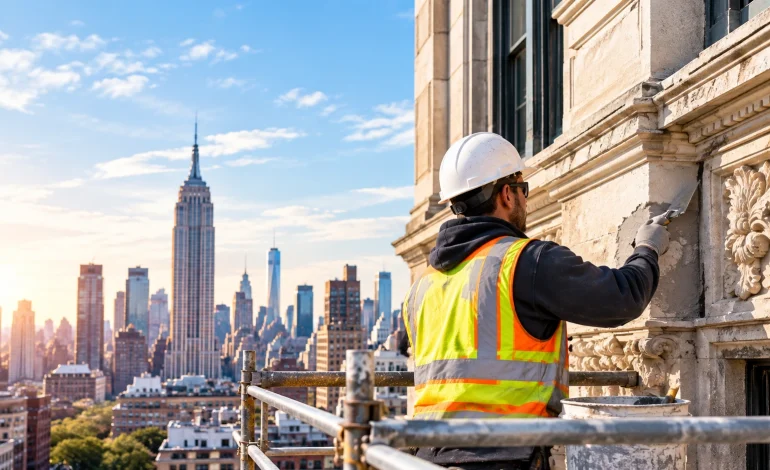
A building’s facade is more than just its exterior appearance. It protects the structure from rain, snow, wind, temperature changes, moisture, and other outdoor conditions. In a city like New York, where buildings are exposed to changing weather and busy urban environments, facade problems can develop gradually and become more serious if they are ignored.
Knowing the early warning signs can help property owners address problems before they lead to extensive repairs. Professional building facade restoration NYC services can help identify damaged areas, restore deteriorated materials, and protect the building for the future.
Building facade restoration involves repairing and restoring the exterior portions of a property that have become damaged, deteriorated, or weakened over time. Depending on the condition of the building, restoration may include masonry repairs, brick replacement, mortar joint repair, concrete restoration, waterproofing, sealant replacement, and other exterior work.
The right restoration approach depends on the building’s materials, age, construction, existing damage, and overall condition. A professional inspection is often the first step toward understanding what repairs are needed.
Some facade problems are easy to notice, while others may require a professional inspection. Property owners should pay attention to the following signs.
Visible cracks are one of the most common signs of facade deterioration. Small cracks may develop because of normal aging or temperature changes, but larger, widening, or recurring cracks should not be overlooked. Cracks around windows, doors, masonry walls, concrete elements, and other structural areas may allow water to enter the building. Over time, moisture can contribute to further deterioration.
A professional should evaluate significant or recurring cracks to determine their cause and the appropriate repair method.
Brick buildings are common throughout New York City, and masonry can deteriorate due to weather exposure, moisture, freeze-thaw cycles, and aging mortar. Loose, chipped, spalled, or displaced bricks can indicate that the facade needs attention. Damaged masonry may also create falling-material hazards if pieces become detached from the building.
Replacing severely damaged bricks and repairing surrounding masonry can help restore the exterior and prevent additional deterioration.
The mortar between bricks can weaken over time. When mortar becomes cracked, loose, powdery, or missing, water can penetrate the wall more easily. This condition is often addressed through repointing, where damaged mortar is carefully removed and replaced with suitable new mortar.
Regular masonry maintenance can help extend the service life of a facade and reduce the risk of more extensive deterioration.
Water infiltration is another important warning sign. Stains on exterior walls, ceilings, or interior surfaces near facade areas may indicate that water is entering through cracks, joints, damaged masonry, failed sealants, or other openings. Moisture can cause more than cosmetic damage. Persistent water exposure can contribute to masonry deterioration, corrosion of embedded metal components, mold growth, and damage to interior finishes.
Professional facade restoration can address damaged areas and improve the building envelope’s resistance to water penetration.
Spalling occurs when concrete begins to crack, break, or lose pieces from its surface. It can occur when moisture reaches reinforcing steel inside the concrete and contributes to corrosion. Property owners may notice exposed reinforcement, broken concrete, surface cracks, or pieces of concrete falling from the facade.
Concrete deterioration should be assessed promptly because damaged areas can continue to worsen if the underlying cause is not addressed.
Metal elements incorporated into a building facade can deteriorate when exposed to moisture and air. Rust may appear on lintels, railings, structural connections, fire escapes, or other exterior components. Rust can sometimes indicate that moisture has reached areas that require attention. In some situations, corrosion can also affect surrounding masonry or concrete.
A professional inspection can determine whether cleaning, protective treatment, repair, or replacement is necessary.
Sealants around windows, doors, expansion joints, and other facade openings help keep water and air from entering unwanted areas. Over time, caulking can crack, shrink, harden, or separate from surrounding materials. Failed sealants may allow water to enter the wall assembly.
Replacing deteriorated sealants is an important part of exterior building maintenance and may be included in a larger restoration project when several facade components have deteriorated.
A section of masonry that appears to bulge outward or become uneven may indicate a more serious facade problem. This can occur for several reasons, including moisture damage, deterioration of supporting components, movement, or construction-related issues. Bulging masonry should be evaluated by qualified professionals rather than treated as a simple cosmetic issue.
Early assessment can help property owners understand the cause and determine what corrective work is required.
White, powdery deposits on brick or masonry are commonly known as efflorescence. They form when water moves through masonry and carries soluble salts toward the surface. While efflorescence itself is not always a major structural concern, repeated or extensive deposits can point to moisture movement within the wall.
If the problem keeps returning, identifying and correcting the source of water infiltration is more useful than simply cleaning the surface.
Even when there are no obvious signs of severe damage, an older facade may require professional assessment. Exterior materials naturally wear down over time, particularly when exposed to New York’s seasonal weather conditions.
Routine inspections can identify deterioration before it becomes extensive. Depending on the building’s condition, restoration may involve localized repairs or a more comprehensive facade rehabilitation project.
New York City buildings experience constant exposure to weather and urban conditions. Rain, snow, wind, temperature fluctuations, moisture, pollution, and repeated freeze-thaw cycles can gradually affect masonry, concrete, metal, sealants, and other facade materials.
Neglecting small problems can allow them to develop into larger repair requirements. For example, a damaged mortar joint may allow moisture to enter a wall, eventually contributing to brick deterioration or corrosion of metal components.
Regular facade inspections and maintenance allow property owners to identify these issues earlier and plan appropriate repairs.
The exact process depends on the building and the extent of deterioration. A typical restoration project may include several stages.
Professionals assess visible and accessible areas of the building to identify cracks, loose masonry, damaged concrete, failed sealants, moisture problems, and other signs of deterioration.
The findings are reviewed to determine the severity of the problems and which areas require repair. Additional investigation may be necessary when the cause of damage is not immediately visible.
A restoration plan is developed based on the facade’s materials, condition, and repair requirements. The work may involve masonry repair, brick replacement, repointing, concrete restoration, waterproofing, or sealant replacement.
Qualified contractors carry out the required repairs using methods and materials appropriate for the existing facade.
After repairs are completed, the restored areas can be reviewed to ensure the work addresses the identified problems. Ongoing maintenance can then help protect the facade and reduce future deterioration.
Facade restoration is not simply about improving a building’s appearance. A well-maintained exterior helps protect the structure from moisture and weather exposure while addressing deteriorated materials.
Professional restoration can also help property owners identify underlying problems rather than only treating visible symptoms. For example, repairing a water stain without finding the source of the moisture may not solve the underlying issue.
Working with experienced professionals also helps ensure that repair methods are appropriate for the building’s construction and existing materials.
Sigma Builders INC provides professional building and exterior construction services for property owners who need to address facade-related problems. When a facade shows signs of deterioration, the right approach begins with understanding the condition of the building and identifying the areas that require attention.
From masonry deterioration and concrete damage to moisture-related problems and exterior repairs, professional assessment can help property owners develop a practical restoration plan.
If your property has visible cracks, damaged bricks, deteriorated mortar, spalling concrete, water infiltration, or other facade concerns, Sigma Builders INC can help you understand the restoration requirements and take appropriate steps to maintain the building’s exterior.
Facade problems should not be ignored simply because they appear minor. Cracked masonry, loose bricks, deteriorated mortar, water infiltration, spalling concrete, rusting metal, and damaged sealants can all indicate that a building’s exterior needs professional attention.
For NYC property owners, timely building facade restoration NYC services can help address deterioration, protect exterior materials, and maintain the condition of the property. Regular inspections and proper maintenance can also make it easier to identify problems before they become more extensive.
If you notice warning signs on your building’s facade, consider having the exterior professionally evaluated. Early attention can help property owners make informed decisions about necessary repairs and long-term facade maintenance.
Common warning signs include cracks, loose or damaged bricks, deteriorated mortar, spalling concrete, water infiltration, rusting metal, damaged sealants, and bulging masonry. A professional assessment can determine the severity of the problem.
The appropriate inspection schedule depends on the building’s age, materials, condition, and applicable NYC requirements. Property owners should also arrange an assessment when visible deterioration or unusual changes appear.
Yes. Some cracks may be minor, but others can allow moisture to enter the building or indicate movement and material deterioration. Cracks that grow, return, or appear alongside other damage should be professionally evaluated.
It can. Restoration may include repairing cracks, replacing deteriorated mortar, renewing sealants, and addressing other areas where water can enter. The exact waterproofing solution depends on the source and extent of moisture intrusion.
The timeline varies depending on the building’s size, facade materials, extent of deterioration, repair methods, and project requirements. A professional assessment is needed to provide a realistic project schedule.
No. Older buildings may experience more material deterioration, but newer buildings can also develop facade problems because of weather exposure, moisture, construction defects, or inadequate maintenance.
Regular maintenance helps identify deterioration before it becomes more extensive. Addressing facade problems early can help protect exterior materials and reduce the risk of larger repair requirements
Leave A Reply